
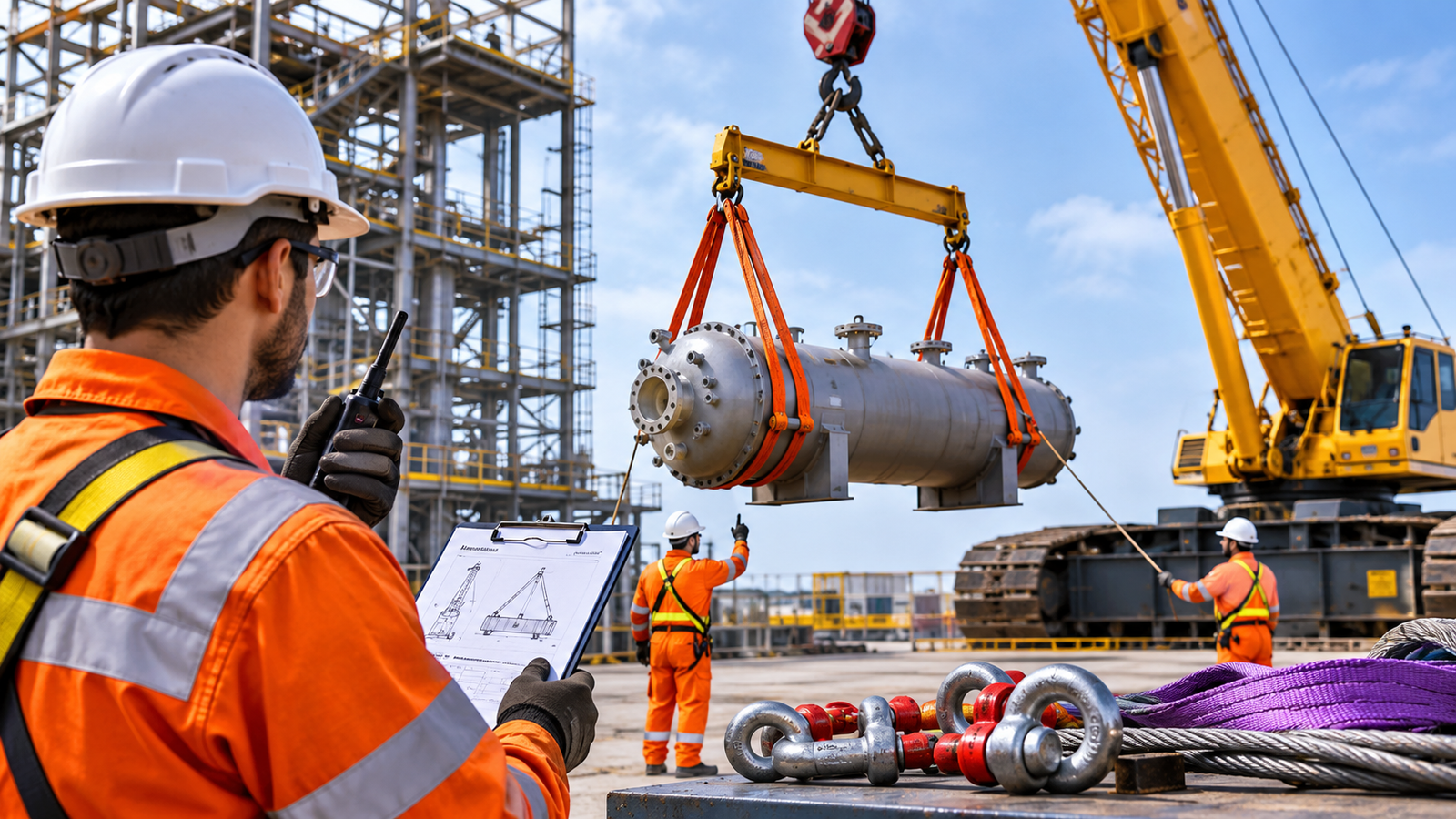
Level 6 diploma in Advanced Rigging and Lifting
Empowering professionals through accredited international qualifications.
Explore Other CoursesCourse Overview
The HiQual Level 6 Diploma in Advanced Rigging and Lifting is a professional qualification designed to develop advanced knowledge, technical expertise, and leadership capabilities in complex rigging and lifting operations. The programme provides learners with an in-depth understanding of lifting engineering principles, advanced rigging techniques, load calculations, crane operations, lifting equipment selection, and the planning and supervision of high-risk lifting activities.
Learners develop the ability to analyse complex lifting requirements, evaluate engineering constraints, prepare comprehensive lifting plans, assess operational risks, and implement effective control measures. The qualification also focuses on lifting equipment assurance, load stability, critical lifting operations, and emergency management across construction, oil and gas, offshore, manufacturing, and heavy industrial environments.
Qualification Details
| Qualification Title | Level 6 diploma in Advanced Rigging and Lifting |
|---|---|
| Total Credits | 120 |
| Guided Learning Hours | 360 |
| Qualification Time | 1200 |
-
A relevant Level 3 qualification or equivalent in rigging, lifting operations, mechanical engineering, construction, or a related technical discipline.
-
Relevant industrial experience in rigging, lifting operations, crane operations, or heavy equipment handling.
-
Basic knowledge of engineering mathematics, mechanical principles, and workplace health and safety.
-
Ability to understand technical documents, engineering drawings, and lifting procedures.
-
Mature learners with substantial relevant professional experience may be considered through Recognition of Prior Learning (RPL), subject to the awarding body's requirements.
-
Advanced Principles of Rigging and Lifting Operations
-
Lifting Equipment, Cranes and Rigging Hardware Engineering
-
Advanced Rigging Calculations and Load Dynamics
-
Slinging Systems, Load Attachment and Rigging Configurations
-
Advanced Lifting Operations and Heavy Lift Engineering
-
Lifting Operations Planning, Risk Assessment and Engineering Control
-
Complex, Critical and Specialised Lifting Operations
-
Lifting Supervision, Communication and Emergency Management
-
Lifting Equipment Assurance, Inspection and Operational Improvement
-
Develop advanced technical knowledge of rigging and lifting engineering.
-
Understand complex lifting arrangements and heavy lifting operations.
-
Improve competency in load calculations, sling configurations, and load distribution.
-
Develop expertise in crane selection and lifting equipment assessment.
-
Strengthen lifting planning, risk assessment, and operational control capabilities.
-
Gain knowledge of critical lifting operations and specialised lifting techniques.
-
Improve leadership and supervision of lifting teams.
-
Understand international lifting standards and industry best practices.
-
Enhance professional development opportunities across construction, oil and gas, offshore, and heavy industrial sectors.
This qualification is suitable for:
-
Experienced riggers and advanced rigging professionals.
-
Lifting supervisors and lifting operations coordinators.
-
Crane operators seeking advanced technical knowledge.
-
Lifting planners and appointed-person-track professionals.
-
Mechanical and lifting engineers.
-
Construction and heavy industrial supervisors.
-
Oil and gas and offshore lifting personnel.
-
HSE professionals responsible for lifting operations.
-
Professionals involved in heavy lifting, load handling, and rigging engineering.
The qualification is assessed through a combination of written examinations and applied assessment activities designed to evaluate learners' theoretical understanding, technical knowledge, and ability to apply advanced rigging and lifting principles.
-
Assessment Method: Written examinations and scenario-based assessments.
-
Paper 1: Advanced Rigging and Lifting Engineering.
-
Paper 2: Advanced Lifting Operations and Integrated Case Studies.
-
Assessment Format: Technical questions, engineering calculations, scenario analysis, and practical application-based questions.
-
Submission Deadline: 24 hours for each examination, where applicable under the approved assessment arrangements.
To deliver this Qualification, HiQual UK Approved ATPs must demonstrate the capability to deliver, assess, and internally quality assure qualifications in line with recognised regulatory principles and the expectations of the Regulated Qualifications Framework (RQF).
Approved centres must operate effective systems to ensure the validity, reliability, fairness, consistency, and security of assessment.
1. Centre Recognition and Legal Compliance
Centres must be formally recognised by HiQual UK prior to the delivery or assessment of any
qualification. To maintain recognition, centres must:
Be a legally constituted organisation operating in compliance with applicable legislation and
regulatory
requirements.
Demonstrate effective governance, management oversight, and clear lines of accountability.
Comply with all HiQual UK policies, procedures, and conditions of centre recognition.
Notify HiQual UK promptly of any material changes that may affect delivery, assessment, or internal
quality assurance arrangements.
2. Resources, Facilities, and Learning Environment
Centres must ensure that sufficient and appropriate resources are in place to support learning and
assessment. This includes:
Learning environments appropriate to the mode of delivery, including classrooms and, where
applicable,
specialist or practical facilities.
Access to learning and assessment resources that enable learners to meet qualification outcomes.
Secure systems for managing learner data, assessment records, and certification claims.
Arrangements that support equality of access and reasonable adjustments for learners where required.
3. Staff Competence and Occupational Expertise
Centres must ensure that all staff involved in delivery, assessment, and internal quality assurance
are
competent and suitably qualified. Centres must:
Appoint tutors with appropriate subject knowledge, teaching competence, and relevant occupational or
professional experience.
Ensure assessors are trained and competent in applying HiQual UK assessment requirements and
standards.
Appoint a qualified Internal Quality Assurer (IQA) responsible for monitoring assessment practice
and
decisions.
Maintain records of staff qualifications, experience, training, and continuing professional
development
(CPD).
4. Assessment Practice and Internal Quality Assurance (IQA)
Centres must operate robust internal quality assurance systems to ensure assessment integrity.
Centres
must:
Ensure assessment is valid, fit for purpose, and conducted in line with HiQual UK requirements.
Implement effective IQA procedures to monitor assessor performance and confirm the consistency of
assessment decisions.
Maintain accurate, complete, and auditable records of learner registration, assessment evidence, and
outcomes.
Carry out regular internal reviews and standardisation activities to support continuous improvement.
5. Integrity, Risk Management, and Malpractice
Centres must take appropriate measures to protect the integrity of assessment. Centres must:
Maintain policies and procedures for the prevention, identification, and management of malpractice
and
maladministration.
Ensure secure handling, storage, and retention of assessment materials and learner evidence.
Report any suspected or confirmed malpractice to HiQual UK in accordance with published procedures.
6. Health, Safety, Safeguarding, and Learner Protection
Centres must provide a safe, inclusive, and supportive learning environment. Centres must:
Comply with applicable health and safety and safeguarding legislation.
Conduct risk assessments for learning activities, particularly where practical or technical work is
involved.
Maintain procedures to safeguard learner welfare and wellbeing.
7. Learner Information, Support, and Fair Treatment
Centres must ensure learners are informed, supported, and treated fairly. Centres must:
Provide clear and accurate information on programme requirements, assessment methods, and
certification.
Ensure learners receive timely and constructive feedback on assessment outcomes.
Operate transparent complaints and appeals procedures aligned with HiQual UK requirements.
Manage learner information securely in compliance with data protection legislation.
Successful learners may progress towards advanced professional and managerial opportunities in rigging, lifting engineering, and heavy lifting operations, including:
-
Advanced Rigging Supervisor.
-
Lifting Operations Supervisor.
-
Lifting Planner.
-
Heavy Lift Operations Coordinator.
-
Rigging and Lifting Technical Specialist.
-
Lifting Operations Manager.
-
Lifting Engineering Coordinator.
-
Construction and Mechanical Project Manager.
-
HSE Manager specialising in lifting operations.
-
Further advanced studies in Mechanical Engineering, Construction Management, Project Management, and Occupational Health and Safety.
Frequently Asked Questions
Find answers about this qualification, assessment and certification.
-
A relevant Level 3 qualification or equivalent in rigging, lifting operations, mechanical engineering, construction, or a related technical discipline.
-
Relevant industrial experience in rigging, lifting operations, crane operations, or heavy equipment handling.
-
Basic knowledge of engineering mathematics, mechanical principles, and workplace health and safety.
-
Ability to understand technical documents, engineering drawings, and lifting procedures.
-
Mature learners with substantial relevant professional experience may be considered through Recognition of Prior Learning (RPL), subject to the awarding body's requirements.
-
Develop advanced technical knowledge of rigging and lifting engineering.
-
Understand complex lifting arrangements and heavy lifting operations.
-
Improve competency in load calculations, sling configurations, and load distribution.
-
Develop expertise in crane selection and lifting equipment assessment.
-
Strengthen lifting planning, risk assessment, and operational control capabilities.
-
Gain knowledge of critical lifting operations and specialised lifting techniques.
-
Improve leadership and supervision of lifting teams.
-
Understand international lifting standards and industry best practices.
-
Enhance professional development opportunities across construction, oil and gas, offshore, and heavy industrial sectors.
The qualification is assessed through a combination of written examinations and applied assessment activities designed to evaluate learners' theoretical understanding, technical knowledge, and ability to apply advanced rigging and lifting principles.
-
Assessment Method: Written examinations and scenario-based assessments.
-
Paper 1: Advanced Rigging and Lifting Engineering.
-
Paper 2: Advanced Lifting Operations and Integrated Case Studies.
-
Assessment Format: Technical questions, engineering calculations, scenario analysis, and practical application-based questions.
-
Submission Deadline: 24 hours for each examination, where applicable under the approved assessment arrangements.
This qualification is suitable for:
-
Experienced riggers and advanced rigging professionals.
-
Lifting supervisors and lifting operations coordinators.
-
Crane operators seeking advanced technical knowledge.
-
Lifting planners and appointed-person-track professionals.
-
Mechanical and lifting engineers.
-
Construction and heavy industrial supervisors.
-
Oil and gas and offshore lifting personnel.
-
HSE professionals responsible for lifting operations.
-
Professionals involved in heavy lifting, load handling, and rigging engineering.
Related Qualifications

Lifting and Rigging tools Inspector
View Lifting and Rigging tools Inspector
Level 2 Award in Lifting Supervisor
View Level 2 Award in Lifting Supervisor